The Minister of Transport inspects the stations and route of the second line of the high-speed train network, October/Aswan/Abu Simbel. 15/06/2026 | 01:16 AM
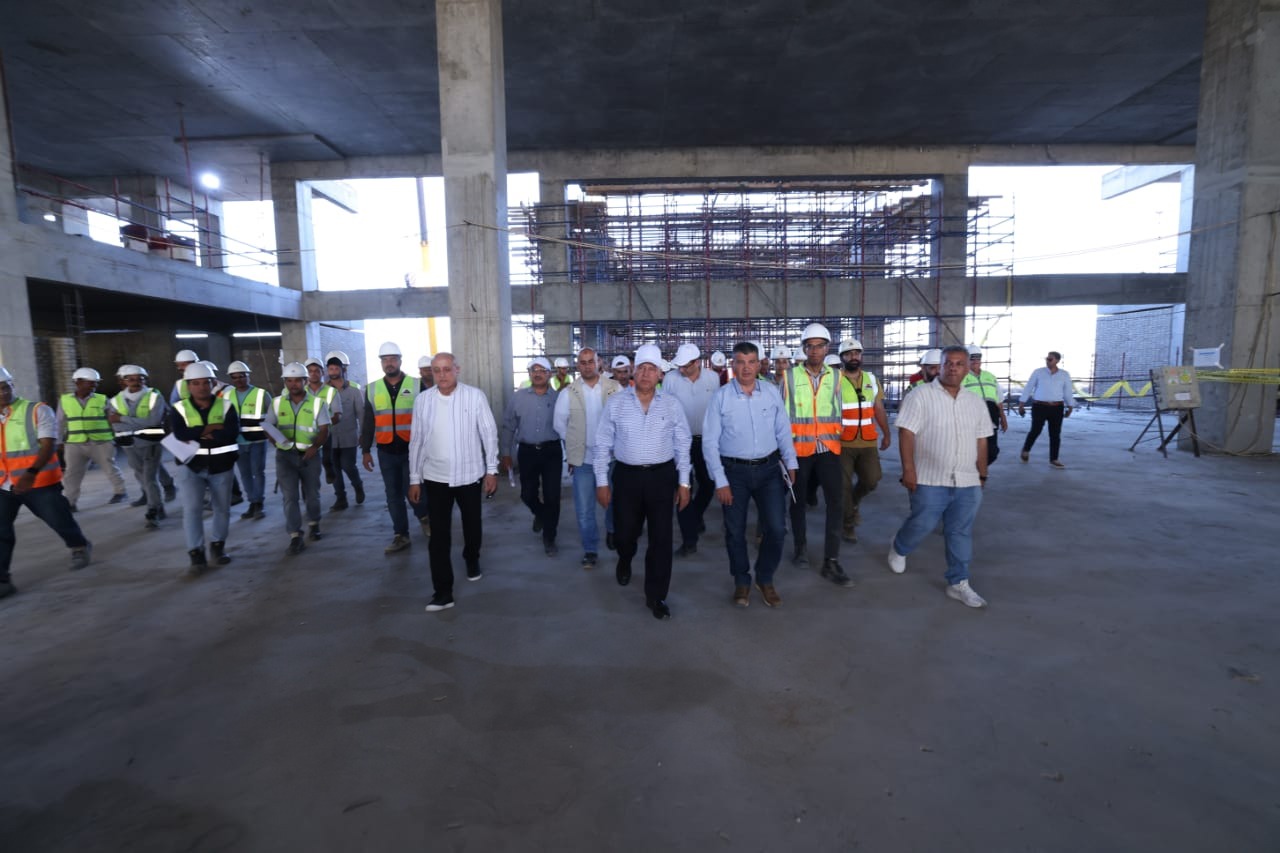
The Minister of Transport inspects the stations and route of the second line of the October/Aswan/Abu Simbel high-speed train network, the distance from Aswan station to Luxor station, with a length of 210 km.
Within the framework of the directives of His Excellency President Abdel Fattah El-Sisi, President of the Republic, to continuously follow up on the high-speed electric train network project, and during his expanded tour in the governorates of Aswan and Luxor to inspect a number of development and service projects implemented by the Ministry of Transport, the team, engineer / Kamel Al-Wazir, Minister of Transport, accompanied by the engineer / Amr Lashin, Governor of Aswan, and Engineer / Abdel-Muttalib Emara, Governor of Luxor, conducted an inspection tour accompanied by the work sites on the second line of the high-speed electric train network (October / Aswan / Abu Simbel), which Its length is 1,100 km, and the distance from Aswan station to Luxor station is 210 km
The Minister inspected the work sites at 9 stations in this distance, including 3 stations for high-speed trains, namely (Aswan Airport, which enjoys a distinguished location and is located near the alternative axis of the Aswan Tank, at a distance of 2 km. The station serves the city of Aswan, Aswan International Airport, and Aswan University - Edfu. It is located opposite the intersection of the Edfu axis with the Western Desert Road - Luxor, and its location is distinguished by its proximity to the Samir Farag axis and Luxor Airport. The station serves the new urban expansions, which are represented in the city of Luxor. Al-Jadeeda (New Thebes) helps serve tourist areas and stimulate tourism, and is considered an important attraction in developing the area, as well as serving the industrial zone in Luxor, and 6 stations for regional trains, namely (New Aswan, which serves the new urban expansions represented by the new city of Aswan, which is 7 km away from the station, as well as serving energy companies. It also helps attract investment opportunities, and serves the industrial zone in New Aswan. - Kalabsha, which is distinguished by its location in front of the Kalabsha axis, and serves the city Kalabsha, Fares, and Egypt Future Agency projects - Al-Sabaiya, which is located at the entrance to the city of Al-Sabaiya and serves the phosphate mines - Daraw, which serves the city of Daraw, 20 km away. It also serves the Benban solar energy station - Esna, which is located at the entrance to the city of Esna and west of the Luxor-Aswan Western Desert Road and is about 12 km away from the city of Esna. - Arment, which serves the city of Arment and the surrounding agricultural areas) from a total of 36 stations that make up the number of stations on the second line. From the high-speed train network (13 stations for express trains and 23 stations for regional trains)
The Minister followed up on the progress of the station implementation work, the time plan for completing all works, the flow chart for passenger traffic from the main entrance to the stations until reaching the ticket halls and movement between the platforms, and the investment plan for each station. The Minister directed to intensify work around the clock and implement all work according to high quality standards, noting that it was taken into account that the locations of the stations should be generally close to roads, residential places, and areas of intersections with the Nile axes, to serve the residents of Upper Egypt governorates, and that all approaches to the stations should be free and serve all directions of traffic, in addition to To create parking spaces at the various stations to connect them with the cities and villages surrounding each station, in order to facilitate travelers’ access to the stations from all directions and from all nearby cities and villages.
The Minister also followed up on the implementation of the industrial works route carried out by national Egyptian companies. The Minister directed that it be implemented in accordance with high quality standards, especially with the importance of the line, which is considered part of the logistical development corridor (Alexandria/Cairo/Aswan/Toshka), one of whose goals is to create a development corridor west of the Western Upper Egypt Desert Road and link the agricultural production areas in Toshka, west of Aswan, and west of Minya with the consumption areas in Cairo and the export areas in Alexandria, in addition to linking the tourist areas. Starting from Abu Simbel, Aswan, Luxor, Abydos, and Upper Egypt in the Al-Ahram and Giza area in Cairo. He pointed out that the second line contributes to linking the ore production areas and quarries (Abu Tartur - Qena - Aswan) with export ports and reducing environmental pollution resulting from the operation of diesel tractors. The three express electric train network lines also provide thousands of direct and indirect job opportunities, and will contribute to reducing and shortening the time of trips between governorates to more than half the time taken by the citizen. Currently, either through the old train network or through the current roads linking the governorates
The second line will also achieve many economic advantages for the Egyptian state by linking with the logistics areas of Farshout, Naga Hammadi, Qena and Toshka, and serving new and future cities such as (New Beni Suef - New Fayoum - New Fashn - New Minya - New Malawi - New Assiut - Nasser City in Assiut - New Sohag - New Akhmim - West New Qena - New Qena - New Thebes - New Luxor - New Aswan - Toshka....) It will also enhance connectivity with the New Valley governorates through Farshout Station, which exchanges service with the Abu Tartur railway line, in addition to achieving connectivity between the tourist areas of (Luxor - Aswan - Abu Simbel) and the resorts and tourist lands allocated to the Hurghada Tourism Development Authority, pointing out that the second line exchanges service with the first line at October Gardens Station and with the third line at Qena Station.
It is worth noting that the high-speed train network consists of 3 lines with a total of 2,000 km and 60 stations, with a total of 2 main workshops and 5 maintenance points. The fleet of this network is 41 high-speed trains, 94 regional trains, and 41 goods tractors. The length of the second line of the network (October/Aswan/Abu Simbel) is 1,100 km and includes (36) stations, one command and control center, and one workshop for Umrah work. The main and major ones, in addition to 3 points for maintenance and storage, located in the areas of (Aswan - Abu Simbel)