During his extensive tour of several Upper Egyptian governorates 12/05/2026 | 11:35 PM
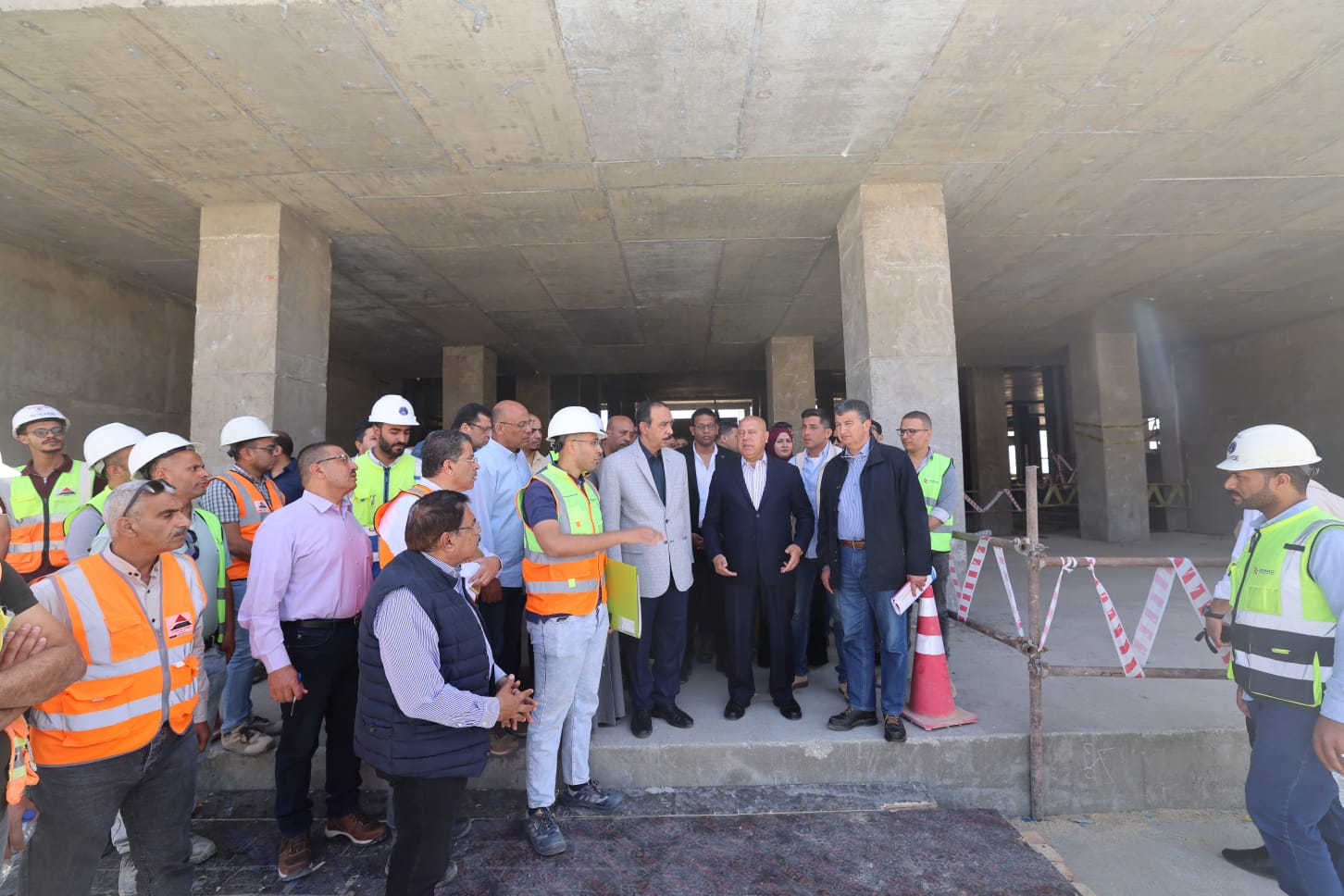
The Minister of Transport inspects work sites on the second line of the high-speed electric train network (October/Aswan/Abu Simbel, from Deirout to Luxor). Lieutenant General/Engineer Kamel El-Wazir, Minister of Transport, continued his inspection tours of Upper Egyptian governorates to follow up on projects implemented by the Ministry of Transport. The Minister, accompanied by the heads and leaders of the National Authority for Tunnels and the General Authority for Roads and Bridges, inspected work sites on the second line of the high-speed electric train network (October/Aswan/Abu Simbel), which is 1100 kilometers long, specifically the 380-kilometer stretch from Deirout to Luxor. The Minister inspected 16 stations along this stretch, out of a total of 36 stations that comprise the second line of the high-speed train network. These include four high-speed train stations (Assiut, Sohag, Qena, and Luxor) and twelve regional train stations (Deirout, El-Qusiya, Manfalut, Abutig, El-Ghanayem, Tahta, Juhayna, Abydos, and Farshut). The Minister of Transport inspected the stations (Nag Hammadi, Deshna, and Qus), where he reviewed the progress of construction and finishing work, the implementation schedule, and the passenger flow plan from the main entrance of each station to the ticket halls, including movement between platforms and the availability of elevators to facilitate passenger movement. He also reviewed the plan for optimal administrative and investment utilization of all spaces in the various stations. The Minister directed that all work be intensified to expedite completion, emphasizing that the stations were generally located near roads, residential areas, and Nile River intersections to serve the residents of Upper Egypt governorates. He also stressed that all access roads to the stations should be free-flowing and serve all directions of traffic, facilitating passenger access from all directions and from all nearby cities and villages. The Minister also monitored the construction of the railway bridge and related infrastructure work and directed that all work be carried out according to high-quality standards. During his inspection of the Qena station, in the presence of Major General Mustafa Selim, Governor of Qena, and Prince Hashem Al-Dandrawi, Head of the Dendera Cultural Center, the Minister of Transport distributed compensation checks to those affected by the project, including occupants of buildings and land that conflict with the route of the second line. The high-speed electric train network within the Qena station area was discussed, with the speaker explaining that several factors were considered during the planning stages. These included an environmental impact assessment, conducted before economic feasibility studies, to select a route that minimized potential conflicts and ensured minimal disruption to citizens' lives. He added that the people of Upper Egypt have always been supportive of national projects and have spared no effort in addressing any problems or challenges facing any project, whether it be Nile bridges or axes, railway development, or the current high-speed electric train network. He emphasized that President Abdel Fattah El-Sisi has directed that no citizen be harmed by national projects and that they receive their fair share, as these are the people whose interests the government is committed to protecting. He further noted that 90% of the employees at Qena station will be from the local area, and the project will provide numerous job opportunities for residents of the governorate both during and after its implementation. He also highlighted that Qena residents will have priority in investing in the station's commercial and investment zones, and Upper Egyptians will have priority in investing in the commercial zones of stations along the second line of the high-speed electric train. Additionally, he mentioned that many Upper Egyptians are employed on the first line of the high-speed train. The Minister of Transport emphasized that the route of the second line of the high-speed electric train was designed to run alongside the Western Desert Road, connecting it to all Nile River crossings in Upper Egypt. This will create a vital service and development axis serving all residents of Upper Egypt.
During his tour, the Minister stated in press remarks that this line is part of the Alexandria/Cairo/Aswan/Toshka Logistics Development Corridor. One of its objectives is to create a development corridor west of the Western Desert Road, linking agricultural production areas in Toshka, western Aswan, and western Minya with consumption centers in Cairo and export hubs in Alexandria. Furthermore, it will connect tourist areas, from Abu Simbel and Aswan to Luxor, Abydos, and Upper Egypt, with the Giza Pyramids area in Cairo. The Minister also noted that the second line will facilitate connections between raw material production areas and quarries (Abu Tartour, Qena, and Aswan) and export ports.